
What Pages Does a Manufacturing Website Need?
If you are planning a new manufacturing website or taking stock of the one you already have, the answer is more manageable than it usually feels at the start. Most manufacturing websites need six types of pages. A home page, capabilities pages, product or service pages, an about page, industries pages, and a contact page built around how the company actually sells.
These are page types rather than a page count, since a manufacturer with a real catalog will have dozens of product pages and a service-based shop may have a handful of process pages. What matters is that each type is present and doing its job. Beyond that core set of manufacturing website pages, what you add depends on what you make and who buys it.
Those six types carry more weight than most manufacturers expect, because buyers work through them long before anyone picks up a phone. According to the 2025 State of Marketing to Engineers report from GlobalSpec, TREW Marketing, and Elektor, technical buyers spend sixty percent of the buying process online on average, and 73% routinely turn to vendor websites and online technical publications when researching a work-related purchase. Your site is doing the early qualifying, whether it was built for that job or not.
Think of it as a screening interview you never get to attend. The buyer arrives with a requirement, works through your pages looking for reasons to keep you or drop you, and you find out the result only if you made the cut. The pages below appear in the order in which the interview usually happens.
The Baseline Manufacturing Website Pages Every Company Needs
These are the pages a buyer expects to find without having to hunt for them. Miss one and you create friction at exactly the wrong moment, when someone is deciding whether you belong on a shortlist.
Home
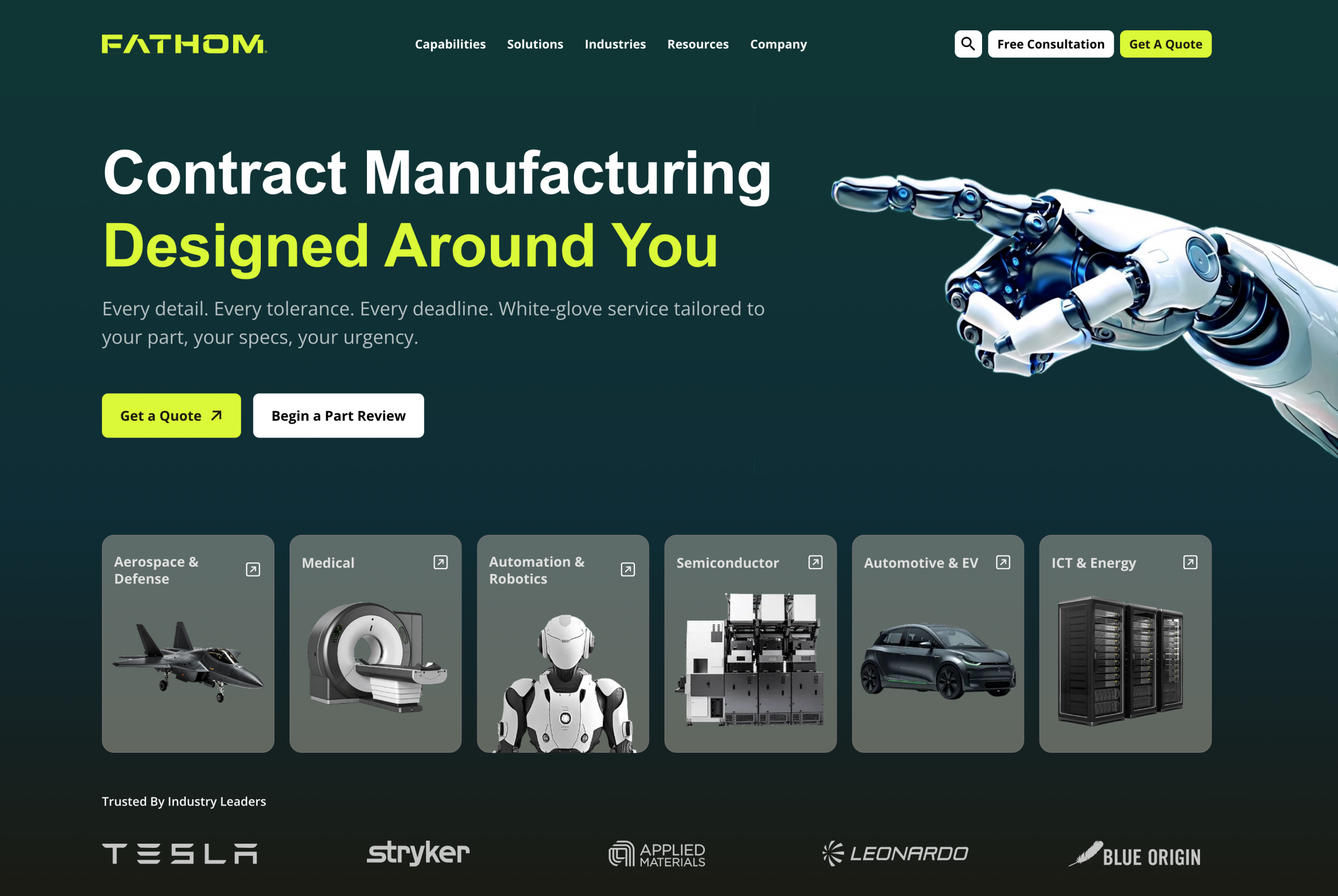
Your home page has a few seconds to state what you make, who you serve, and which markets you operate in. A visitor who cannot answer those three questions quickly will leave and check the next supplier on the list. No hard feelings, just a closed tab.
Its second job is routing. An engineer, a buyer, and a distributor need different paths, and the home page determines how quickly each finds the right one. The most common failure we see is opening with the company history when the visitor came to confirm a capability. Good design work solves this by giving each audience a visible entry point without turning the page into a directory.
Capabilities
For technical buyers, this is often the first stop and it should cover processes, equipment, tolerances, materials, and production volumes in enough detail that someone can judge fit without calling to ask.
Specificity beats polish every time here. A buyer screening suppliers wants numbers, named processes, and equipment lists, and vague language reads as a company that either lacks the capability or cannot describe it. Detailed capabilities content also does real SEO work because process and material searches are how many industrial buyers start looking for a supplier in the first place.
Products or Services
What belongs here depends on whether you sell a catalog or a process. Product-based manufacturers need category and product pages organized the way buyers search, which is frequently different from how the company organizes things internally. Service-based manufacturers need process pages explaining what happens to a part between the quote and delivery.
Either way, a technical audience expects specifications, applications, and documentation on the page. In the same GlobalSpec and TREW Marketing study, 79% of technical buyers named datasheets among the content they find most valuable when researching a significant work purchase, and 37% named CAD drawings. Product selection tools and parametric search topped the list of most valuable interactive tools at 66%, making filterable product pages worth the investment for any large catalog.
About the Company
Once a buyer has confirmed you can do the work, the question changes. Now they want to know whether you will still be around in three years and whether your operation can absorb their volume.
An industrial about page should answer that with facts. Years in operation, facility size and location, headcount, and the scale of what you handle all serve the buyer here. Mission and values have a place on this page too, and they work best once the facts have given them something to stand on. A page that opens with passion and excellence, and saves the specifics for later, asks a technical buyer to take your word for something you could simply show them.
Industries and Markets Served
Industry pages prove that you understand the environment in which a part operates. A buyer in aerospace and a buyer in food processing have very different concerns about the same machining capability, and a page addressing each of them removes the doubt that a general capabilities page cannot.
Whether this stays one overview page or expands into a page per market depends on how different those markets really are for your business. The trap to avoid is a set of near-identical pages with the industry name swapped, which serves no one and can drag down quality signals across the whole site.
Contact
Every page above exists to move someone toward this one, and its job is simpler than many manufacturers make it out to be. The form here should stay basic. Name, email, company, and a line about why they are reaching out covers it, because the person filling it in might be a buyer, a job applicant, or a supplier, and none of them should feel interrogated on the way in.
What this page really owes a visitor is options. Your physical address, phone numbers with department routing, a general email, a link to schedule a meeting, business hours, and social profiles all belong here, since many buyers would rather call or book time than type into a box. For manufacturers with multiple facilities, making it obvious which location handles what saves everyone a misdirected call.
Buyers also arrive here from different states. A first-time engineer, a returning distributor, and someone chasing an existing order should each see an obvious route. And when a visitor is ready to talk specifics, this page should hand them off to the inquiry path instead of trying to do that job itself.
What Is Beyond the Contact Page
Selling anything configured or engineered? Then a basic contact form is only the front door. That same research found 72% of technical buyers spend at least half of the buying process online before choosing to speak to someone, so whatever sits at the end of that journey has to serve a visitor who already knows what they want.
An inquiry or quote request form is a different animal, and this is where the fields should mirror what you sell. A contract manufacturer needs quantity, material, tolerance, and a drawing upload. An equipment maker may need an application, capacity, and a project timeline. Ask for the right details up front and a vague message becomes something your estimators can price without three rounds of email.
Form length is a real trade-off here, and there is no universally correct answer. More fields qualify the lead, but reduce the number of people who finish. Fewer fields raise volume and push qualification onto your sales team. Where you land depends on how much lead flow that team can absorb, which is worth asking them directly. When quoting is your primary sales motion, this path deserves its own page and logic, including conditional fields that adapt to what the buyer asks for.
The Optional Pages, and When They Earn Their Place
Everything up to this point belongs on essentially every manufacturing website. What follows is the discretionary layer, where the answer depends on what you have to show, who you sell to, and whether anyone within the organization will keep the content current. Adding one of these because a competitor has it is the wrong reason. Adding one because it answers something buyers keep asking is the right one.
A Dedicated Certifications Page
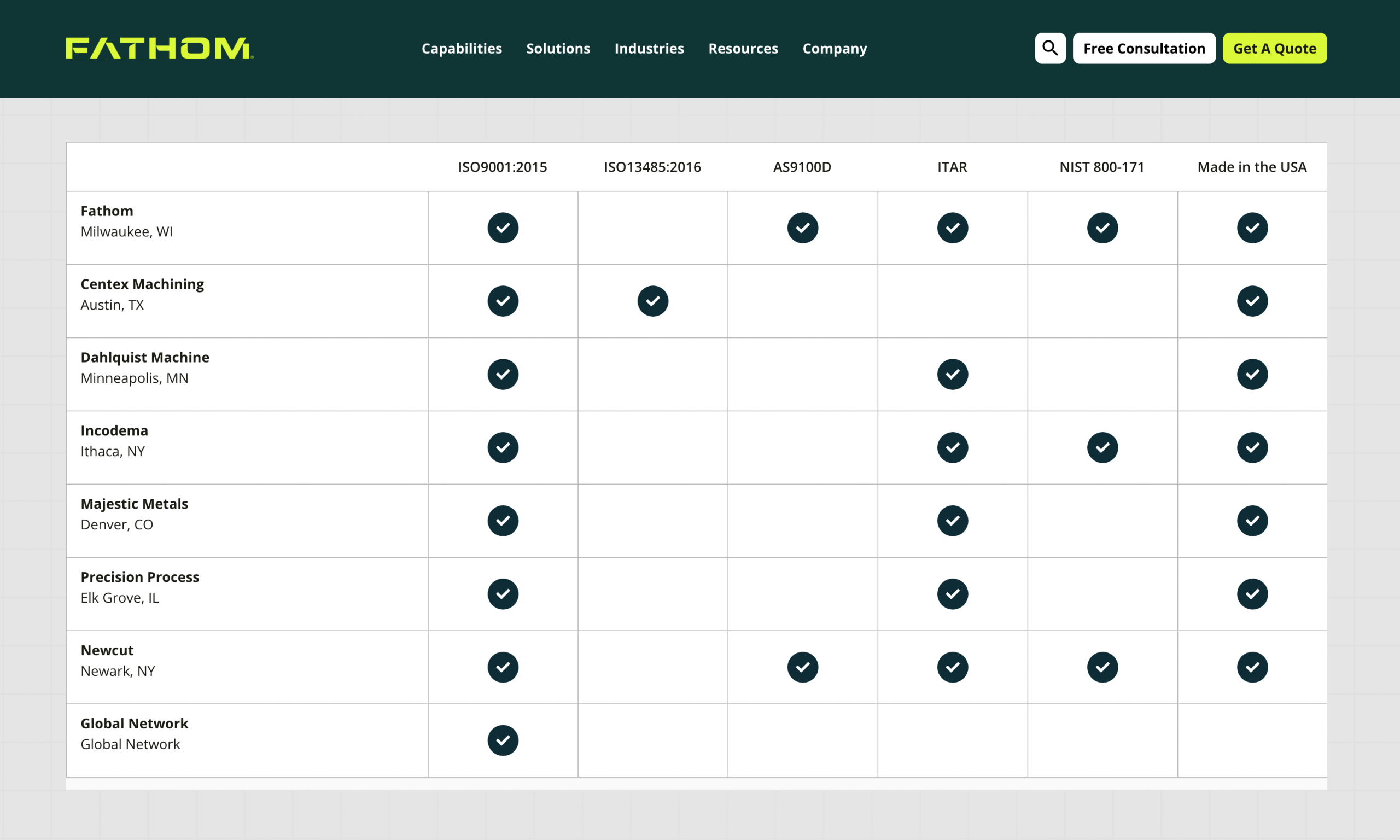
Certifications themselves are not optional, but a page for them often is. In most projects, they work harder, woven into the pages buyers already visit, so the about page carries the registrations and what they mean for the work, the footer displays the marks, and home, product, and service pages surface the relevant ones at the moment someone is evaluating that specific capability.
A standalone page earns its place when a company wants a real spotlight on them, which tends to happen where approvals are a genuine differentiator or where buyers need to download and forward documentation. Wherever the content ends up, it is worth building for search as much as for the reader, since buyers search certification terms directly, often combined with a process or a location.
Testimonials
A page of quotes from named customers at named companies can do useful work in a market built on reputation. The catch is that many manufacturers cannot obtain approval to publish clients’ names, and anonymous praise from “a leading OEM” convinces no one.
If you can only gather a handful of usable quotes, they usually perform better placed on the pages they support than collected somewhere on their own.
Case Studies
Case studies are the strongest optional page type on this list for most manufacturers, because they show the work instead of just describing it. A problem, an approach, and a measurable result give a buyer something concrete to compare against their own situation.
They also require a lot of effort to fill and maintain, as each case study will need client cooperation, real details, and permission to publish, which is why so many manufacturers start a case study section and stop at two. In cases like that, a case study page is usually not worth adding.
Press Releases
A newsroom makes sense for companies that actually generate news, including expansions, new equipment, certifications, acquisitions, and leadership changes. Trade publications and industry press look for exactly this material, and having it on your site makes it easier to earn coverage.
For a company publishing once every couple of years, though, the section mostly advertises how quiet things have been.
Team Members
A team page suits companies where relationships drive sales, which describes many manufacturers with long-standing distributor and OEM accounts. Putting real engineers and technical staff on the site also strengthens the expertise signals that both buyers and search engines look for.
It carries maintenance weight, since a page listing people who left two years ago undercuts the credibility it was built to create.
The Blog Is Also Optional, But Don’t Dismiss It Right Away
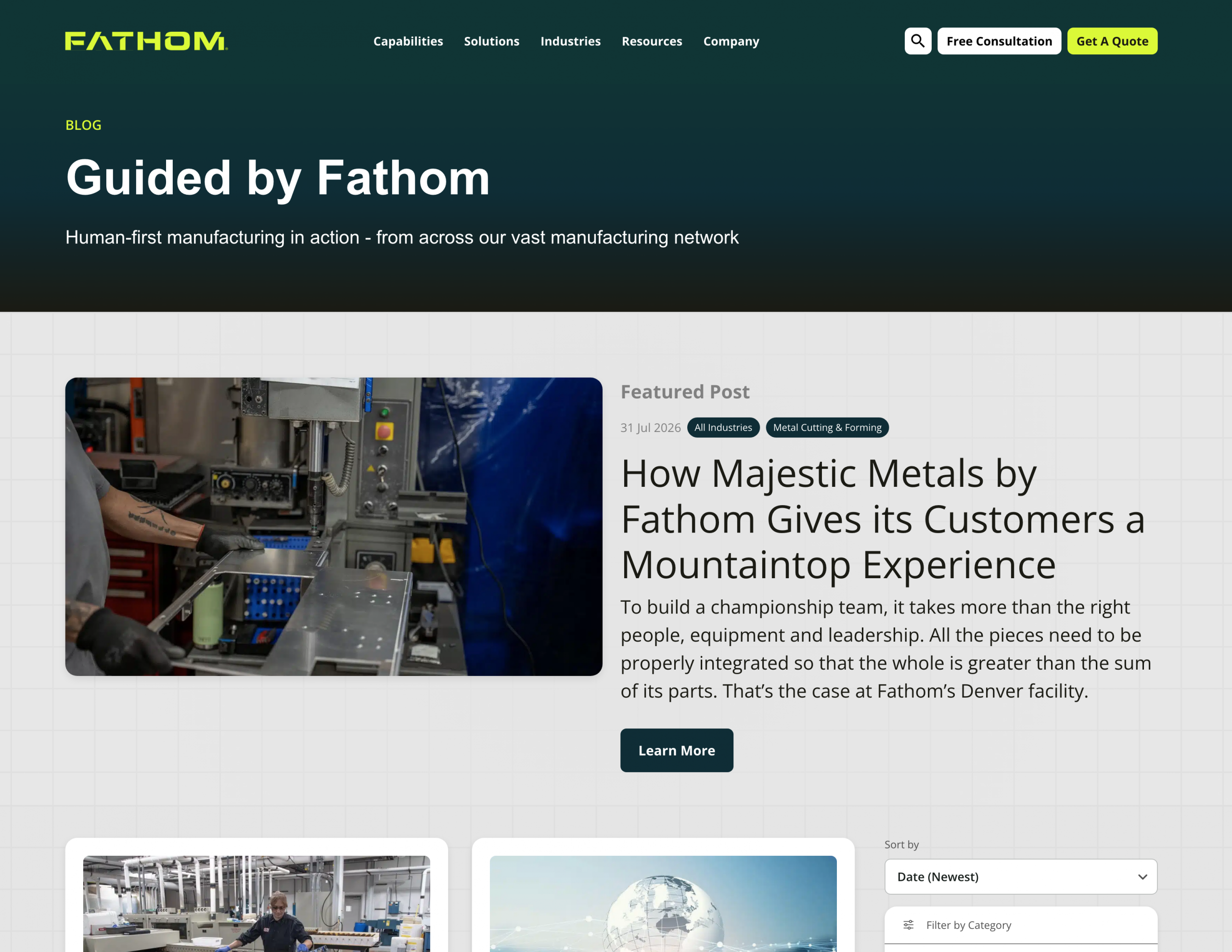
The blog belongs in that optional group as well, although I would not recommend skipping it if you have the resources to maintain one. Every page covered so far serves someone who already knows they need a supplier. A blog reaches people earlier than that, while they are still working out what the problem even is.
The visibility argument is straightforward. Capabilities and product pages target buyers who already know what they want, leaving much of the informational search demand uncaptured. Publishing substantive technical content also builds authority, giving search engines and AI answer engines something specific to attribute to your company when someone asks a question in your area of expertise.
Picture who is reading months before an RFQ appears.
A maintenance engineer diagnosing a recurring failure.
A design engineer weighing two materials.
A plant manager researching a process improvement.
All three are real potential buyers, just on a longer clock, and a blog is how you enter that conversation early enough to be remembered when the clock runs out.
Before launching a blog on your website, note that a neglected blog page with only a few outdated posts can harm your brand, making your company’s website appear inactive or poorly maintained. This is a commitment to make deliberately or skip entirely. If you do commit, the best topics are already sitting in your sales team’s inbox, because the questions your reps answer on repeat calls are the questions buyers are typing into search.
How the Right Pages Shift From One Manufacturer to Another
The page list stays fairly consistent across manufacturers. What changes is which pages drive sales, and that should determine where your depth and budget go.
Contract Manufacturers
With no product catalog to browse, capability depth carries the entire site. Process pages, equipment lists, and quality documentation do the work product pages do elsewhere, and buyers judge fit almost entirely on that material.
The RFQ path becomes the primary conversion mechanism here, which means it needs a real structure. A general form asking for a name and a message wastes the moment when the buyer already has a drawing in hand.
Specialty Chemical Suppliers
Product data, safety documentation, and regulatory information shift from supporting material to the site’s center. Buyers need SDS access, compliance details, and technical specifications quickly, and they will absolutely judge a supplier on how easily those documents can be found.
Application-based navigation often serves these buyers better than a straight product list, since many arrive knowing the problem they need solved without knowing which product solves it.
Industrial Equipment Manufacturers
Longer consideration cycles call for more supporting content. Case studies, specification comparisons, and service or parts information all help a buyer justify a capital purchase internally, which is frequently the real obstacle standing between you and the order.
Distributor and dealer information may need its own path through the site. Aftermarket support pages also influence the sale more than most equipment makers expect, because a buyer evaluating a ten-year investment is evaluating your service organization at the same time.
Your Sitemap Should Follow Your Sales Process
The six-page types above are where every manufacturer starts. What changes from one company to the next is the weighting, the depth, and what gets added, all of which come from how you actually sell and how your target audience behaves.
Here is a diagnostic worth running this week. Look at any page on your site and ask which buyer question it answers. Pages existing because a department wanted representation, or because a competitor had one, tend to fail that test in about four seconds. However, pages that answer a question your sales team hears every week tend to generate inquiries.
Whether your audit reveals strengths or weaknesses, the primary takeaway remains clear: manufacturing website pages perform best when structured to match your buyers’ evaluation process.
About Karen Barbosa

Karen Barbosa is an SEO Project Manager at Lform Design with over seven years of experience in search optimization. She started her career as a content writer and grew into a full-spectrum SEO practitioner by following her curiosity into the technical and strategic sides of the discipline.