The 7 Key Strategic Benefits of Choosing a Specialized Industrial Web Design Agency
You only need to conduct one Google search to come across dozens of web design agencies and feel completely lost. For industrial companies needing a new website, ruling out agencies that don’t specialize in their sector helps narrow the field. However, many soon run into a hard reality: specialized agencies tend to require a larger upfront investment.
Looking at price alone, going with the cheaper option may be tempting. Either choice will deliver a website, so who cares, right? The thing is, the price you pay for a website is never just monetary. The time and patience you have to dedicate to the process will also compound the final cost.
The short answer to our core question today is that specialized industrial web design gets you there faster and with fewer wrong turns. A specialist already understands how engineers, procurement teams, and distributors evaluate a supplier online, so the project starts from that knowledge instead of slowly building toward it. Here’s what that looks like in practice.
Benefit #1: A much shorter learning curve
Every web project starts with the agency learning about the client. With a generalist agency, learning starts at square one, and basic questions naturally arise: What is an RFQ? Why does a buyer need a CAD file before a sales call? Why can’t a product page contain only a few bullet points and a short summary paragraph?
An industrial web design team skips that part. They already know what a factory floor, a distributor network, and a six-month sales cycle mean for a website. What’s left to learn is what makes your business unique, such as your processes, your customers, and your company’s goals. That part can’t be copied from another manufacturer’s website, and it’s exactly where a discovery process should spend its time.
In my experience, this is where clients first notice the difference. The kickoff call goes beyond a basic glossary session and becomes a strategic discussion.
Benefit #2: Room for every spec sheet and certificate
Industrial buyers rarely make decisions based on a nice product photo. They need data sheets, material specifications, tolerances, safety data sheets, ISO or AS9100 certifications, compliance documentation, installation manuals… and the list goes on, depending on the industry.
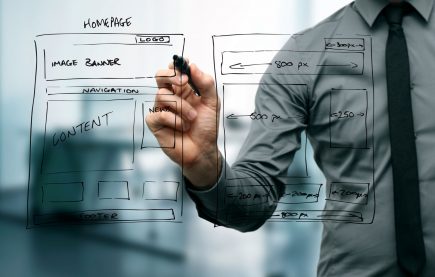
A specialized team, however, plans for them from the sitemap stage and builds content hierarchies that can hold every type of document and piece of information an industry requires. Most importantly, they create pages that are easy to update without calling a developer every time a change is needed because space for each key piece of information already exists and is easy to manage.
This benefit is particularly relevant for search visibility, whether you’re thinking of traditional Google results or AI like ChatGPT, since those platforms want to fulfill the searcher’s intent. If your website helps them do that, it will definitely be used as a source of information.
Benefit #3: Navigation built for how industrial buyers search
An engineer looking for a replacement part doesn’t browse the way someone shopping for sneakers does. Many arrive knowing exactly which specifications they need to find—such as a part number, material, or dimension—and want to access them in as few clicks as possible. Others arrive with a specific problem and need guidance toward the right product family or capability.
Industrial websites must serve both use cases. That usually means navigation organized by product, industry served, and application, with filters that reflect real technical attributes. Get this wrong, and buyers leave for a competitor whose website makes their job easier. Get it right, and the website starts doing part of your sales team’s work.
Benefit #4: A look your buyers will trust
There’s a common belief that industrial websites have to look dated. They don’t. However, there’s also a version of “modern” that doesn’t fit an industrial brand at all, such as oversized lifestyle imagery, trendy animations, and playful copy that would feel right at home on a consumer app.
A generalist agency may deliver a website that looks good in a portfolio but doesn’t match what your target audience expects to see or trust. Specialized design aligns aesthetics with positioning and features clean layouts that let technical content breathe, and a visual tone that says “reliable supplier” rather than “startup.” This is achieved because, at an industrial web design agency, aesthetics and performance go hand in hand, as specialists understand that design is a core element in convincing a buyer you can deliver.
Benefit #5: Conversion paths that fit a long sales cycle
Flashy “Buy Now” buttons and banners offering 10% off work great in B2C. In manufacturing, nobody is buying a custom-machined component on impulse.
Industrial conversion paths look different. Request a quote, talk to an engineer, download a spec sheet, find a distributor, request a sample… each CTA serves a buyer at a different stage, and each needs to be placed where it is truly strategic.
A specialized agency designs these conversion paths around how B2B buyers navigate a long, multi-stakeholder decision process, ensuring the website has the paths to keep users moving in the right direction toward closing a deal.
Benefit #6: Less trial and error
Every website undergoes testing and refinement after launch. That’s healthy. What isn’t healthy is a launch that functions as a trial-and-error experiment, where the agency discovers in real time what industrial buyers respond to—all on your budget.
A team that has built websites for manufacturers before already knows what works and what doesn’t. This includes knowing which page structures support quote requests, which content buyers evaluate before contacting sales, and which features look impressive in a pitch but often go unused once the site is live.
That accumulated knowledge is hard to replicate, and it’s one of the main reasons specialist projects tend to need fewer rounds of corrections. At Lform, for example, we’ve been building for manufacturers since 2005, and many of our early project decisions come directly from lessons learned on previous builds.
Benefit #7: ERP and third-party integrations are familiar territory
Industrial websites rarely operate in isolation. Product data might reside in an ERP like NetSuite, while leads flow into Salesforce or HubSpot. A distributor locator might pull from a database updated weekly by the sales team. Additionally, some manufacturers run B2B e-commerce platforms with customer-specific pricing on top of these systems.
For a generalist agency, each of these integrations can be a first-time challenge, but for a specialized one, they’re part of the usual scope. That familiarity matters because a poorly planned integration doesn’t just cause technical headaches, it means outdated product information on your website or leads that never reach the right salesperson.
Is choosing a generalist agency a bad idea?

Not completely, despite what I listed earlier. Generalist agencies have real strengths, and some of them do great work:
- They often bring fresh, creative ideas from working across many industries
- Larger generalist agencies can have more capacity for broader marketing needs
- Depending on the scope, they may come with a lower initial price tag
The problem is that most of those advantages don’t address what makes an industrial website succeed. Fresh ideas are welcome, but they still need to support the buying journey of a user who wants specifications and certifications, not inspiration.
A lower initial cost can disappear quickly once you factor in the hours your team spends teaching the agency your industry, the extra rounds of corrections, and the integration work that wasn’t scoped correctly. Ultimately, if the website fails to generate qualified leads, it was never a cost-effective choice to begin with.
So, a generalist agency isn’t a bad choice by default. For manufacturers, it’s simply a weaker one for every reason listed above.
Your buyers will notice the difference
All the benefits of specialized industrial web design add up to one thing: a website built around the people who actually buy from you.
Engineers find the specs they need.
Procurement teams find the certifications they’re required to check.
Decision-makers see a website that looks as reliable as the products the company makes.
And last but not least, your team spends less time explaining your industry and more time growing the business.
When choosing a partner, ask to see their work with manufacturers, inquire about how they handle technical documentation and integrations, and pay attention to how quickly they understand what you do. The right industrial web design agency will speak your language from the very first call.
About Karen Barbosa

Karen Barbosa is an SEO Project Manager at Lform Design with over seven years of experience in search optimization. She started her career as a content writer and grew into a full-spectrum SEO practitioner by following her curiosity into the technical and strategic sides of the discipline.