
5 Practical Tips for B2B Companies to Write High-Quality Content for Better Search Rankings
Most B2B companies produce content like blog posts and case studies regularly. But many of them still struggle to attract consistent organic traffic from search engines.
So, what is the one main reason for this?
In most cases, the content is not good enough.
In a recent study by the Content Marketing Institute, only 22% of B2B marketers say their content marketing was extremely or very successful over the past year. That means the majority are producing content that is not delivering real results. They are putting in the work but not seeing it pay off.
And Google does not just rank content because it is long or keyword-heavy. It ranks content that is genuinely useful and written for real people.
So if your B2B content is not ranking, the problem is quality. Not quantity.
In this blog, we will look at practical ways B2B companies can improve their content quality and start ranking better in search results.
What Is Quality Content?
Quality content answers the reader’s questions thoroughly. It is easy to follow. It gets to the point. And it gives readers something useful to take away.
Most B2B companies think quality means long content. They write 3000-word blogs and wonder why they are still not ranking.
Length is not quality.
Google sees it the same way. It checks how long people stay on your page. If they leave quickly, Google takes that as a signal that your content did not deliver. And your rankings may drop.
For B2B companies, accuracy matters too. Your readers are professionals. They can spot weak research and vague claims instantly. One poorly researched article can hurt your credibility more than not publishing at all.
So quality content is not about word count. It is about value. Does it solve a problem? Does it answer the question better than anyone else?
If yes, that is quality content.
How B2B Companies Can Create High Quality Content
Improving content quality is not something you can do once and forget. Let’s look at some practical ways to do this.
1. Conduct Detailed Audience Research
Most B2B companies start writing without knowing who they are writing for. They simply pick a topic and write content about it. Then wonder why no one is reading.
The problem is simple. The content is not written for the right people.
You need to know:
- Who are your readers?
- What problems do they face?
- What questions are they searching for?
Go through your existing customers. Read comments on industry forums and check LinkedIn posts in your niche. Simply put, researching your audience in depth will make your content relevant and useful. And relevant content tends to rank better.
2. Cover the Topic in Depth
Covering a topic means explaining the idea from all important angles so the readers do not feel anything is missing.
Readers come to your pages with specific needs in their minds. And they need detailed explanations. They want to understand how something works, why it matters, or how it applies in real situations.
If your content does it well, they stay. If it does not, they go back to Google and click on your competitor’s page. Google notices this user behavior, and this may affect your rankings.
This is why depth matters more than length.
Look for the concerns your target reader might have about the topic. You can get them in multiple ways. Type your topic into the Google search bar. It will show you a list of what users are searching for, like this:
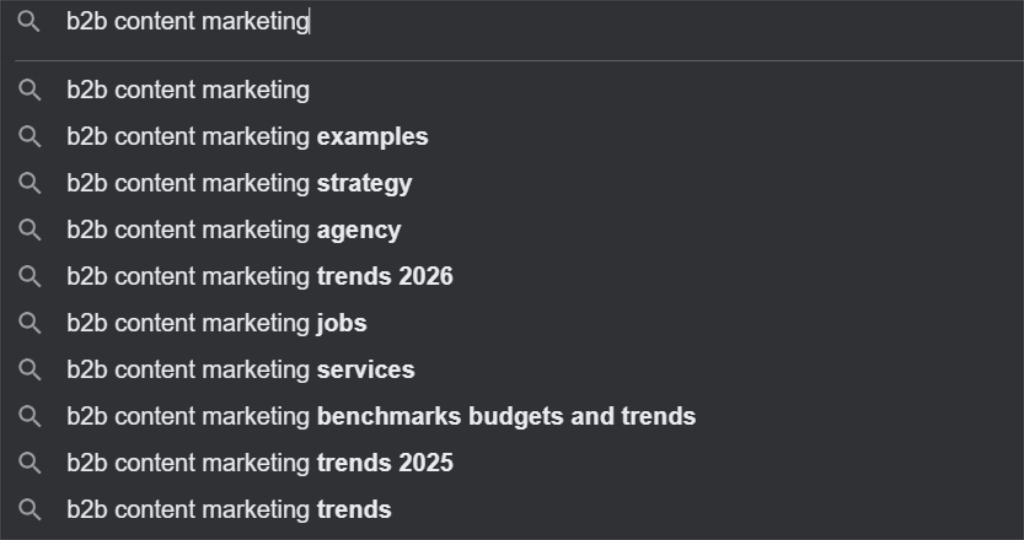
Also, check for the “People also ask” section.
You can also study how top-ranking pages cover the same topic. Look at the angles they include and find areas they have not explored fully. Apart from that, there are multiple tools, like SEMrush and AnswerThePublic, where you can look for relevant search queries for your topic. Look at this example:
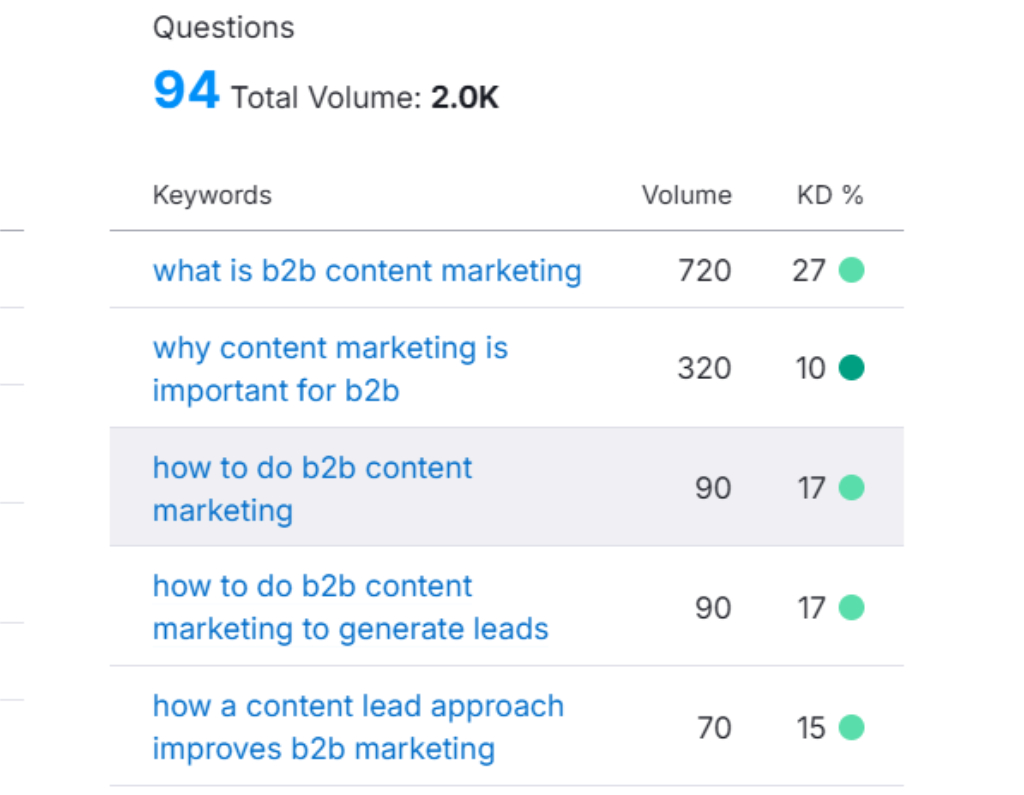
When you start writing, break your topic into smaller parts and explain the core concept first. Then expand into related aspects like use cases, practical applications, common mistakes, and real-world relevance. This layered approach makes your content more useful and easier to follow.
If you find it hard to continue with your topic, you can get assistance from an AI-powered writing tool. For example, a paragraph writer can help you draft a detailed explanation of a specific point or topic. It can give you a starting version that covers the basics, which you can then refine by adding your own insights, examples, and tone. Look at this example:
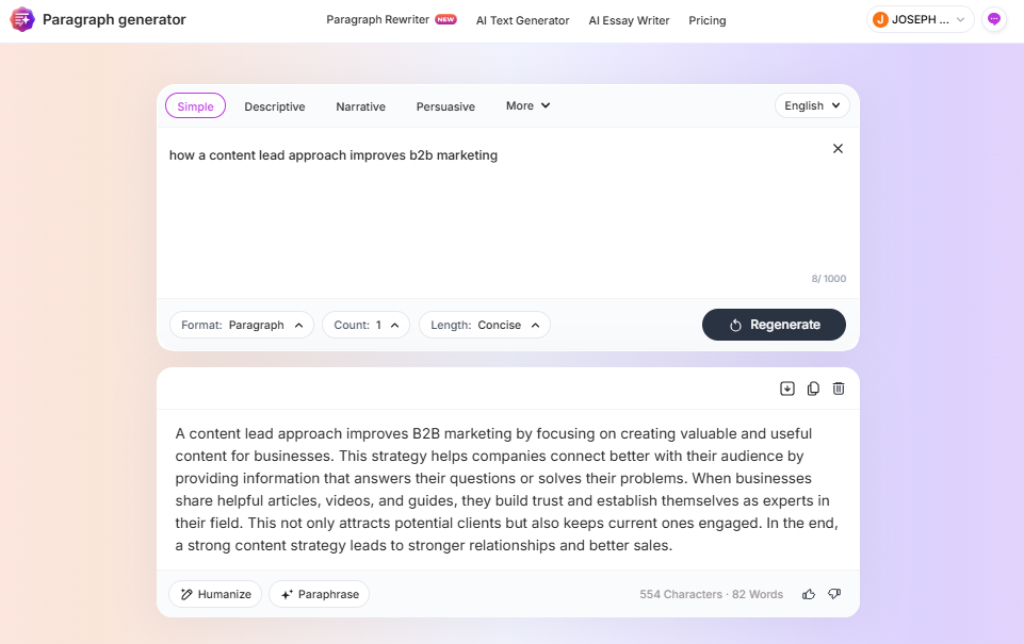
We picked a query from the Semrush results earlier and pasted it into the tool. It provided a clear and to-the-point paragraph according to the query.
3. Match Content to Search Intent
You can write great content and still remain invisible to search engines. And that’s because of one simple reason:
It does not match what the readers are actually searching for.
This is called search intent. Every search query has a reason behind it. Someone searching “best B2B content tools” wants a list. Someone searching “what is B2B content marketing” wants an explanation. These are two very different intentions.
Google understands this. It ranks content that matches the intent. If yours does not, it gets pushed down, no matter how well it is written.
Search intent is categorized into four main types:
- Informational (seeking knowledge)
- Navigational (finding a specific website)
- Commercial (researching products)
- Transactional (ready to buy).
Knowing which one you are targeting makes it much easier to shape your content the right way.
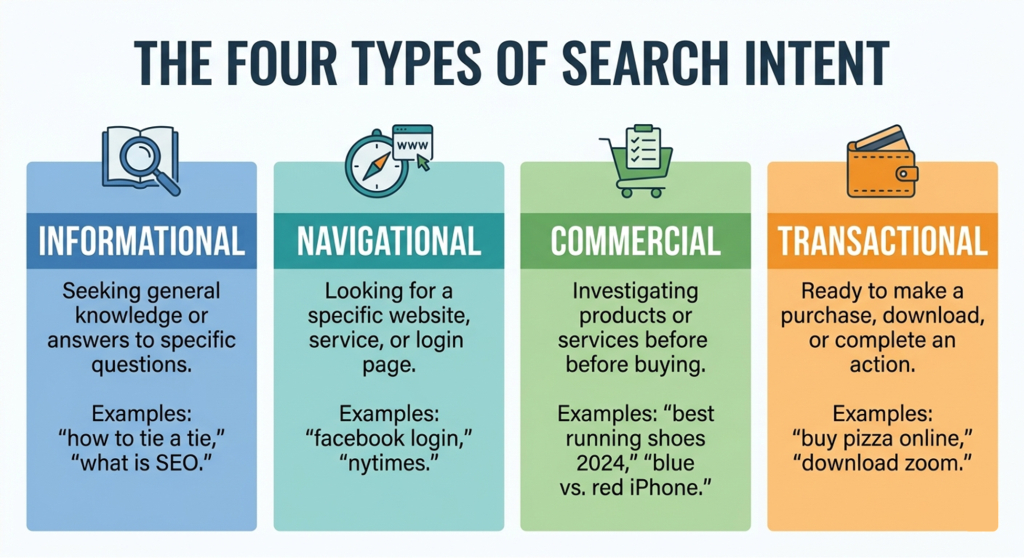
So before writing anything, search your target keyword on Google. Look at the top results. Are they listicles, how-to guides, or definitions? Another way is to look for the intent in SEO tools. Check your keyword in Semrush and look for intent. Here is an example:
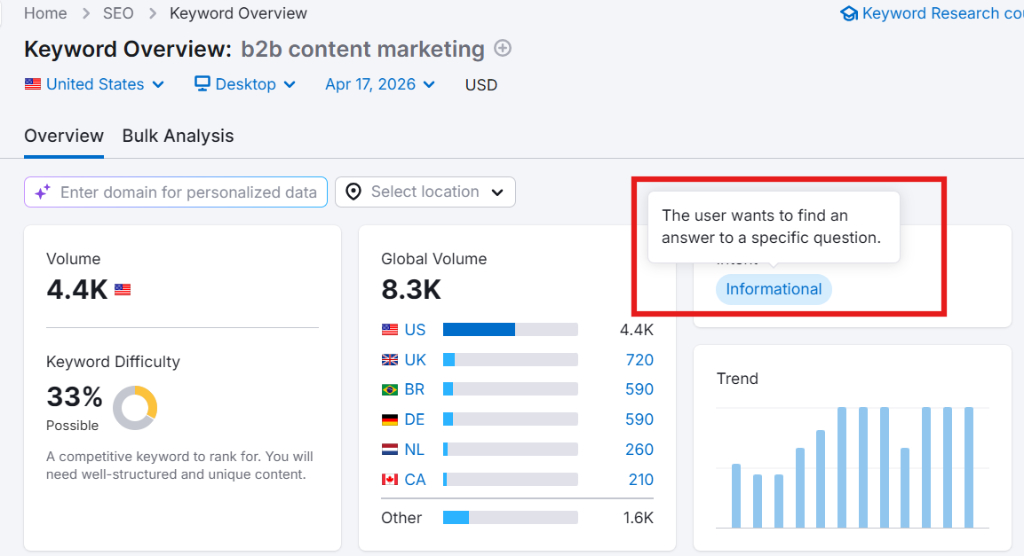
That tells you exactly what your content should look like.
Write for what the reader is looking for. Not what you think they need.
4. Write in Simple, Clear Language
A lot of B2B companies write to impress the reader. They use fancy words and complex phrases to look more professional. But in reality, it just makes the content harder to read.
Here is an example to understand:

See, both sentences are the same. The first one is difficult to read and understand. But the second one is quite easy.
Therefore, write as simply as possible. Use concise sentences and discuss one idea in a sentence. This practice is very important to make it easy for the reader to grasp the content quickly. Also, use simple and effective words to deliver more in fewer words. Try to avoid unnecessary filler. Every sentence should add something. If it does not, remove it.
5. Back Every Point with Data or Examples
This is exactly where most B2B content fails. Writers make bold statements without backing them up. Readers notice this, and eventually, they stop trusting the content.
Google notices it too, using principles like E-E-A-T. It stands for Experience, Expertise, Authoritativeness, and Trustworthiness. It is one of the key ways Google evaluates content quality. Content that demonstrates real knowledge and backs up its claims with data ranks better than content that does not.
So how do you do this?
Add real numbers to your points. Link to original research and studies. Use examples from real situations to explain your point clearly.
For example, instead of saying “video content performs well for B2B companies,” say this: According to DemandSage, 72% of B2B marketers consider video marketing essential.
See the difference? One is a vague claim, but the other is a fact.
Data builds trust, and examples make things clear. Together, they make your content credible. And credible content is exactly what Google wants to rank.
Final Words
Content quality is what separates ranking websites from invisible ones. And now you know exactly what it takes to get there.
B2B buyers are smart. They can tell the difference between content written to rank and content written to help.
So, always write content to help your audience. Cover complete topics to provide solutions to their problems. When the visitors get solutions, it will build trust. This will ultimately help your content rank high in search engines.
About M. Azam

M. Azam is a seasoned digital marketing specialist writer with a strong focus on B2B and SaaS industries. He holds a Master of Science degree and has three years of digital marketing experience. He excels in SEO, SEM, AEO, and content marketing and is proficient in Google Analytics. Azam is passionate about data-driven marketing. He stays updated with trends and experiments with new techniques to help brands grow in competitive markets.