
Why Strong SEO Already Prepares Manufacturing Companies for AI-Powered Search

If you’ve been seeing “answer engine optimization” (AEO) and “generative engine optimization” (GEO) popping up in your LinkedIn feed, don’t worry, you’re not going crazy. Digital manufacturing leaders are fielding questions about AI-powered search from executives who’ve suddenly become nervous that AI is about to disrupt everything they know about search.
Here’s the truth: it’s simpler and way calmer than the hype suggests. AEO and GEO aren’t actually new disciplines or services you need to buy. They’re just outcomes of doing SEO right in the first place.
This article cuts through the noise to explain what these terms really mean, why everyone’s talking about them now, and how they affect manufacturing SEO in the real world. You’ll see why strong technical foundations, structured content, and genuine credibility already set up your plant, contract manufacturing firm, or OEM for AI-driven discovery. And just as importantly, what to avoid as consultants and agencies scramble to rebrand their services.
We’ll translate the jargon into concrete examples for CNC machining, injection molding, metal fabrication, and industrial equipment companies. No panic. Just clarity.
Why AEO and GEO Are Getting So Much Attention
AI’s now front and center in search interfaces. Google’s showing AI Overviews. ChatGPT, Perplexity, and other “answer engines” are summarizing results instead of just listing them. Users are asking conversational questions and expecting direct, source-backed answers. And whenever interfaces change, the marketing industry does what it does best: coins new acronyms and starts the hype cycle all over again.
For manufacturers, this looks like:
- More answers sitting above the traditional “blue links.”
- Summaries that pull from multiple sources, usually with citations
- Voice-style responses to practical, how-to queries
- Fewer clicks for simple questions, but more clicks when someone’s doing complex buying research
Here’s what matters: the presentation of results is changing, not the core way you earn visibility. AI systems still need to find, understand, and trust your content before they can summarize or cite it. That happens through the same fundamentals that have always powered discoverability, clean technical SEO, clear structure, and demonstrable authority. If your site already supports search engines well, you’re not starting from scratch.
What AEO and GEO Actually Mean for Manufacturers (Without the Buzzwords)
AEO means structuring content so AI systems can extract and present direct answers. Those answers might show up in a featured snippet, a voice assistant, an AI Overview, or a chat result. The common requirement is clarity: state the question, provide a specific answer, and back it up with context.
For manufacturers, this plays out in concrete ways. A CNC machining company that publishes a clean tolerance table, a contract manufacturer that explains its qualification process in plain steps, or an injection molder that maintains a well-labeled FAQ about material selection — all of these are already producing the kind of content AEO rewards. The format matters as much as the information itself.
GEO means earning selection and citation when AI tools synthesize responses from multiple sources. Large language models generate summaries, but they still prefer clear, citable, trustworthy content. For manufacturers, the lever is domain authority built around your actual specialty: accurate technical detail, consistent coverage of your processes and capabilities, and reputation signals like relevant backlinks and citations from industry sources.
A contract manufacturer known for tight-tolerance aerospace components, for example, builds GEO equity by publishing authoritative content on that specific niche, not by trying to rank for every manufacturing term imaginable.
Both terms describe distinct visibility outcomes, and their relationship to SEO is something we’ll unpack in the next section.
The Common Thread
Both AEO and GEO rely on the same four pillars: crawlability, structure, clarity, and authority. The shift is in how answers get displayed, not in how your site earns inclusion. A well-optimized spec sheet for “6061 aluminum machining tolerances” serves traditional search, featured snippets, and AI answers equally well.
SEO Is Still the Foundation
Let’s be honest: if search engines can’t find, parse, and trust your content, neither can AI systems. The strongest manufacturing sites treat SEO as a durable infrastructure that enables every surface, classic SERPs, voice, and generative results.
Much of the debate around those strategies is really about terminology, not a fundamental shift in how search works. As Search Engine Land noted in its analysis of SEO’s role in an AI-driven search future, strong technical foundations, clear structure, and authoritative content remain the primary factors behind visibility, regardless of how results are presented.
Technical Infrastructure That Serves All Search Formats
- Crawlability: Ensure that your robots.txt, sitemaps, and server responses permit full access to your core content. If bots can’t reach your CNC capabilities page, an answer engine can’t either.
- Site architecture: Logical navigation and internal linking help algorithms determine relationships (such as a “Materials” hub linking to aluminum, stainless steel, and engineering plastics).
- Performance and mobile: Fast, stable pages reduce friction across devices and surfaces. Nobody wins when your specs take eight seconds to load on a phone.
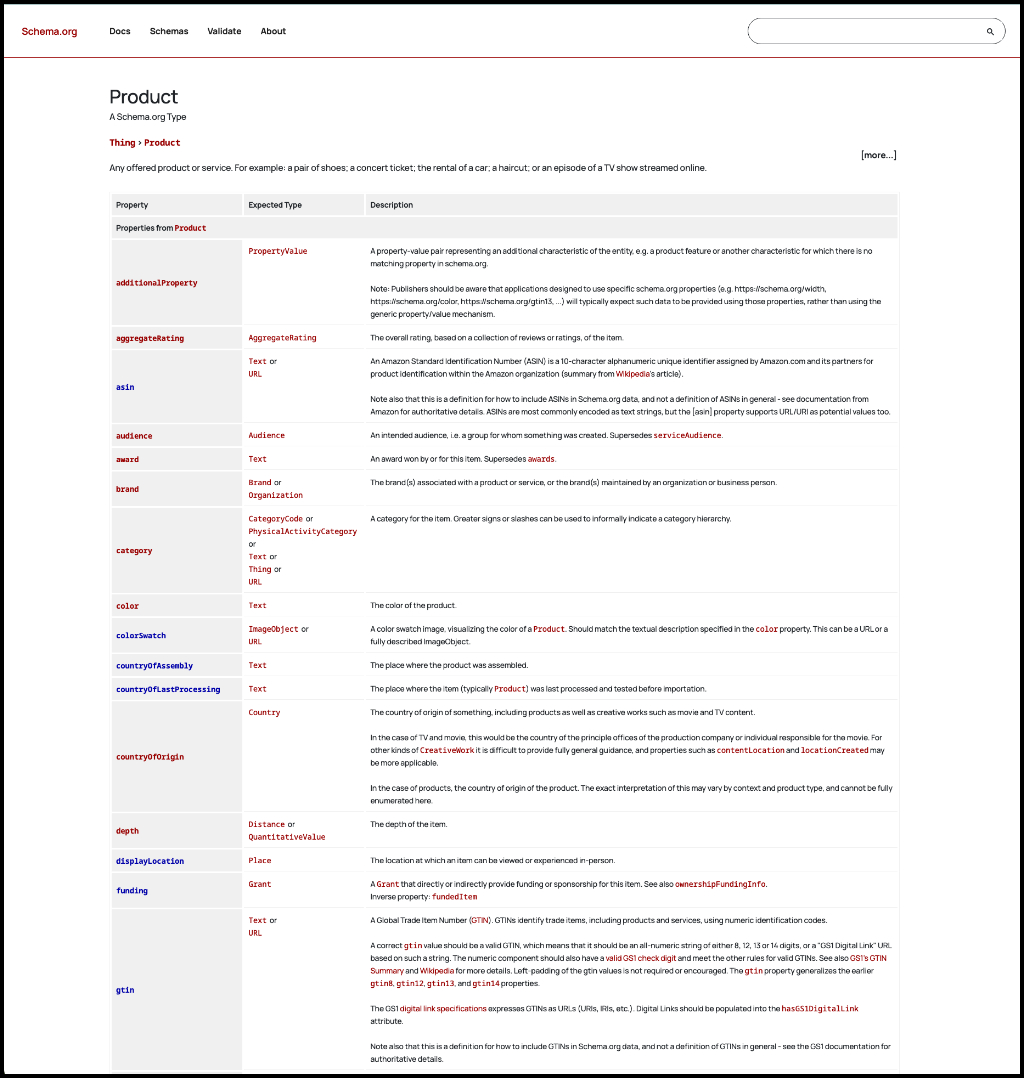
- Structured data: Schema markup (Organization, Product, FAQ, HowTo) adds machine-readable context that helps AI systems correctly interpret your content..
Content Qualities That AI Systems Reward
- Clear information architecture: Descriptive headings, scannable sections, consistent terminology.
- Entity clarity: Unambiguous statements about what you make, who you serve, tolerances you hold, and certifications you carry.
- Authoritative depth: Technical accuracy, diagrams or tables, and real process constraints (like “±0.005 in typical for 3-axis milling; tighter tolerances require secondary ops”).
- Direct answers: Lead with the takeaway, then provide the nuanced details, tradeoffs, and links to deeper pages.
Think about it: technical documentation, process descriptions, and specification sheets already align with these qualities when they’re written for engineers instead of just marketing copy.
The John Mueller Principle
Google’s guidance has been remarkably consistent over the years: if your SEO fundamentals are solid, you have a clean technical setup, a focused information architecture, and authoritative content, you’re already positioned for AI-powered discovery.
For manufacturers, that means you don’t need to reinvent your strategy. You need to double down on clarity, accuracy, and usefulness.
What This Means for Digital Manufacturing Websites
The translation for industrial marketers is straightforward: the same content that helps engineers evaluate fit is the content that answer engines can understand and cite. Think continuity, not reinvention.
Content That Already Works for AI Discovery
- Specification-driven content: Dimensional ranges, tolerances, surface finishes, certifications (ISO 9001, AS9100), materials, and volumes.
- Process documentation: How CNC milling differs from turning, when to choose die casting over injection molding, and post-processing steps.
- Application-based pages: Organized by use case, medical housings, aerospace brackets, industrial enclosures, with constraints, materials, and compliance notes.
- Technical FAQs: Plain-language questions engineers actually ask (“What wall thickness is recommended for glass-filled nylon?”) paired with succinct answers.
These formats succeed because they’re structured, specific, and verifiable. Not because they’re “optimized for AI.”
Where to Focus Your Effort
- Improve existing content quality: Clarify headings, tighten definitions, add tolerances, and include decision criteria.
- Strengthen internal linking: Connect process pages to materials, tolerances, and application examples to show relationships.
- Add structured data where it adds context: FAQ and HowTo for Q&A and stepwise guides; Product for SKUs and configurable parts.
- Prioritize technical accuracy over marketing fluff: Engineers reward candor about limits and tradeoffs. Always.
- Build topical authority: Cover your specialties comprehensively. If you offer injection molding, address materials, DFM, gating, wall thickness, finishes, and common defects.
Example: A contract manufacturer specializing in injection molding should maintain a hub that links to material families (ABS, PC, PEEK), design guidelines (ribs, bosses, draft angles), tolerance tables, and troubleshooting (“sink marks vs. voids”).
What Not to Do
- Don’t chase AEO/GEO tactics in isolation. Extracting a few Q&A boxes without fixing crawl errors or thin content won’t earn citations.
- Don’t publish thin “AI-friendly” posts. Pages that stack dozens of shallow questions without depth won’t build authority, or get referenced.
- Don’t optimize for tools instead of buyers. Write for engineers and procurement first, clear specs, costs, lead times, and constraints, then format for machines.
- Don’t treat AI discovery as a shortcut. Generative answers elevate the most helpful sources. There’s no substitute for comprehensive, accurate content.
- Don’t abandon proven strategies. Preserve your information architecture, evergreen hubs, and internal linking. Iterate; don’t rip-and-replace.
Red flag to avoid: Any vendor promising “instant AEO rankings” or “GEO hacks” without addressing your site’s technical health and content depth. Run.
Focus on What Actually Matters for Your Manufacturing Site
For manufacturers, the question is not whether to choose between AEO, SEO, or GEO. Answer engine optimization and generative engine optimization are simply how strong SEO performs across modern search interfaces. If your manufacturing site is crawlable, well-structured, and authoritative, you are already positioned for AI-driven discovery.
Prioritize technical accuracy, entity clarity, and content built around how industrial buyers actually research and evaluate suppliers. Treat SEO as durable infrastructure, one that adapts as search evolves from blue links to snippets to AI Overviews, without requiring a rebuild every time the interface changes.
The best preparation for AI-powered search is the same as it has always been: be the most credible, helpful source in your manufacturing niche.
Want to know where your site stands? We can assess your current SEO foundation, identify what needs attention, and help you understand what actually moves the needle for manufacturers in search.