
Why Not Having a CRM Could Be Costing Your Manufacturing Company Leads
Manufacturers without a CRM lose leads when customer data sits scattered across emails, spreadsheets, and handwritten notes. That fragmentation slows follow-up and lets inquiries go cold before sales can respond. Because manufacturing sales cycles are long and involve technical reviews, quotes, and multiple decision-makers, a single missed follow-up or a delayed answer is often enough to lose the deal. A CRM centralizes contact records, quote history, and follow-up reminders so fewer opportunities slip away as the company grows.
Picture a prospect requesting a quote for a large manufacturing order. Your sales team receives the inquiry, but the response drags because no one can pull the details together quickly. By the time someone circles back, the buyer has already committed to a competitor.
Many manufacturers never realize how often this happens. While production methods have grown more sophisticated, many businesses still rely on outdated methods for handling sales opportunities and customer relationships. Without a coordinated approach, important leads fall through the cracks, revenue leaks away, and growth stalls.
A Customer Relationship Management (CRM) system provides manufacturers with a single platform to manage sales activities and client relationships. As competition intensifies, companies focused on sales performance and long-term customer connections increasingly treat a CRM as a requirement rather than an upgrade.
Why Lead Management Is Different in Manufacturing
Manufacturing sales are rarely simple. Unlike retail, where a purchase can happen in minutes, manufacturers work through long sales cycles built on multiple conversations, technical evaluations, product specifications, pricing discussions, and sign-offs from several decision makers.
A single customer request might call for design input, production scheduling, and several rounds of revisions before an order is confirmed. Every interaction along the way counts. Lost emails, neglected follow-ups, or slow answers erode a buyer’s confidence and send them looking elsewhere.
Many manufacturing companies also depend on repeat business. Keeping accurate records of past purchases, product needs, and communication history helps sales teams spot new opportunities and deliver better service. Without a CRM, managing that data only gets harder as the company expands.
Hidden Ways Manufacturers Lose Leads Without a CRM
Many companies assume they are only missing an occasional opportunity. In reality, the effects of poor lead management often go unnoticed until they start to show up in overall sales results.
- Inconsistent follow-up is one of the biggest problems.
Obligations to existing clients can consume a sales rep’s day, leaving new inquiries unanswered for days at a time. Even interested buyers lose patience when responses take too long.
- Scattered customer data creates another challenge.
Key details end up spread across emails, notes, and spreadsheets. When information is hard to find, employees waste time searching for it instead of helping clients.
- Limited visibility compounds the issue.
Without a CRM, managers struggle to see which opportunities are heating up, which ones need immediate attention, and where deals are stalling. That makes forecasting difficult and limits any effort to improve the sales process.
Weak communication between departments can cost business too. When sales, customer support, and production teams work from different information, the result is miscommunication, slow responses, and an inconsistent customer experience.
Each of these gaps looks minor on its own. Together, they can sharply reduce the number of qualified leads that ultimately become paying customers.
How a CRM Improves the Entire Sales Process
A CRM gives manufacturers one place to manage every client interaction, from the first inquiry to the final order. Instead of relying on disconnected tools, everyone works from the same current information.
When a new lead enters the system, sales reps can instantly review contact details, past conversations, requested items, quotes, and scheduled follow-ups. That reduces the risk of overlooking real opportunities and improves response times.
CRM systems also make pipeline management far simpler. Managers can track live opportunities, identify stalled deals, and direct support where it is needed most.
Automation adds another layer of efficiency by reminding sales teams about upcoming meetings, outstanding quotes, and pending follow-up emails. Small tasks that are easy to forget become part of a structured workflow, which helps companies stay engaged with prospects.
Over time, this methodical approach strengthens team communication, deepens customer relationships, and produces a more consistent sales process built to support long-term growth.
What This Looks Like on a Real Sales Floor
Consider a mid-size metal fabricator that receives a repeat inquiry from a distributor it last quoted eighteen months earlier. With a CRM, the rep opens the account and immediately sees the prior quote, the buyer specified, the engineer who handled the revisions, and a note that this customer always needs lead-time confirmation before signing off. The rep replies within the hour with an accurate quote and a reference to the earlier job. The distributor feels recognized, and the deal keeps moving.
Without a CRM, that same inquiry lands in a shared inbox. The original rep has moved on, the quote sits in a spreadsheet no one can locate, and the engineer who knew the specs is out on the shop floor. Two days pass before anyone reconstructs the history, and by then the distributor has placed the order with a supplier who answered first.
The difference is whether the information needed to respond was ready the moment the buyer reached out. In long manufacturing sales cycles, that readiness often separates a won deal from a lost one.
How AI Extends What Your CRM Can Do
A CRM delivers clear advantages, yet many manufacturers now run several company systems at once. Customer data lives in the CRM, inventory is managed in an ERP, production schedules are tracked elsewhere, and support teams work in separate service platforms.
When these systems operate in isolation, employees waste valuable time switching between programs, entering data by hand, and correcting errors. That not only slows daily work but also limits the ability to make sound business decisions.
Rather than stitching together disconnected software, some manufacturers are exploring tools like Syngulr to link artificial intelligence (AI) capabilities across business processes, customer data, and operational systems as they continue to digitize.
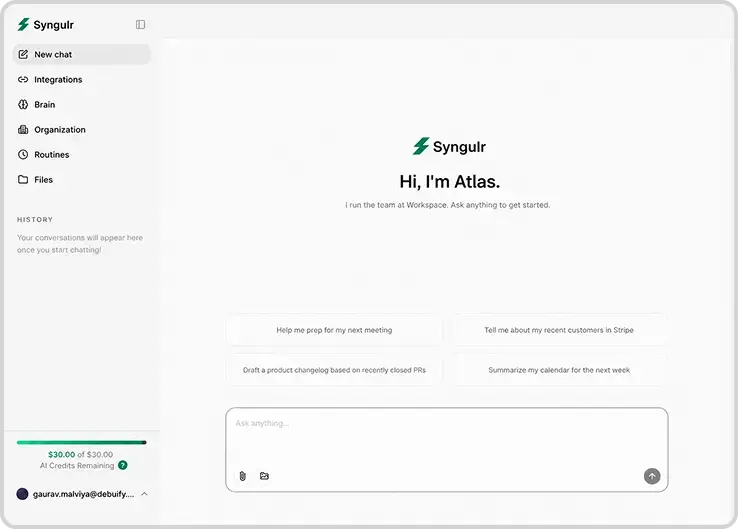
These connections let information move faster across departments. Sales teams gain more visibility into production status, customer service reps can view complete customer histories, and management gets more accurate insights for planning and forecasting. Working from connected information rather than fragmented data helps companies make faster, smarter decisions.
The Real Cost of a Missed Lead
Many manufacturers focus so heavily on production efficiency that they overlook the systems supporting their sales process. Yet even the best products cannot generate revenue if opportunities are lost before they turn into customers.
A CRM helps manufacturers organize client data, run stronger follow-ups, improve teamwork, and gain clarity into the sales funnel. Those improvements support steadier growth and a better customer experience.
As manufacturing becomes more digital, companies should also consider how their CRM fits within the rest of their technology environment. Integrated, AI-driven processes remove unnecessary manual work, sharpen decision-making, and build a more effective organization.
Not having a CRM usually costs companies far more than they realize. Every missed inquiry, delayed answer, or forgotten follow-up can mean a prospective customer choosing someone else. Investing in the right systems now helps manufacturers capture more opportunities, build closer relationships, and stay competitive in a business where every lead counts.
About Ali Murtaza

Ali Murtaza is an SEO specialist with a strong interest in technical SEO, content optimization, and digital marketing. He writes practical, research-driven content focused on improving website visibility, strengthening domain authority, and helping businesses grow through organic search.