
Manufacturing Challenges in 2026: Supply Chain Disruptions, Tariffs, and What to Do

US manufacturers are entering the second half of 2026 navigating a convergence of pressures that would be difficult enough on their own. Together, they are reshaping how industrial companies plan, price, source, and sell.
Freight routes disrupted by the Middle East conflict are adding weeks to transit times and driving up input costs. Tariff policy continues to shift, making it nearly impossible to commit to long-term investment decisions. And buyers, already cautious by nature, are extending their evaluation cycles further as uncertainty becomes the operating norm.
These are the manufacturing challenges 2026 has put on the table. This post breaks down each one and makes the case for what manufacturers can do to protect their competitive position when so many variables are outside their control.
The Strait of Hormuz Disruption and What It Means for US Manufacturers
The escalation of the Middle East conflict in early 2026 brought renewed pressure on one of the world’s most consequential shipping routes. According to Oliver Wyman, the Strait of Hormuz is the transit route for approximately 25% of global seaborne oil trade and 20% of global trade in liquefied natural gas (LNG). Overland pipeline alternatives exist, but cannot sustain regular daily flows at the volume the strait typically handles.
For US manufacturers, the effects are practical and immediate. Major carriers rerouted vessels around the Cape of Good Hope, adding significant time to transit schedules. War-risk insurance premiums climbed, and freight surcharges layered on top of base rates have flowed directly into the cost of raw materials, specialty chemicals, electronic components, and resins.
The deeper problem, as the Institute for Supply Management has documented, is not any single disruption but the unpredictability it creates. Allocation measures are already appearing for key inputs, and lead times continue to lengthen across multiple categories. Manufacturers planning production schedules or new product launches are doing so in an environment where sourcing timelines are moving targets.
What This Means for Procurement and Operations
Supply chain disruptions of this kind do not resolve quickly. Even when shipping lanes partially reopen, insurance premiums and rerouting costs remain elevated as risk assessments adjust slowly. Manufacturers who have not already mapped their single-source dependencies and built contingency supplier relationships are facing that exercise under pressure rather than in advance.
Tariff Uncertainty Is Paralyzing Manufacturing Investment
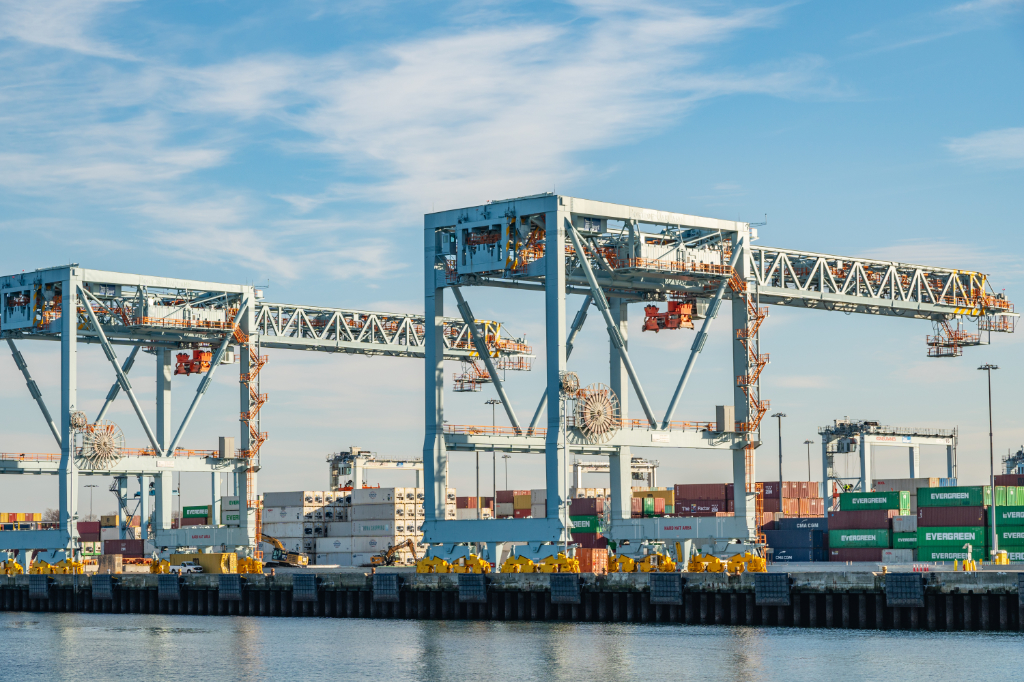
The supply chain disruption does not exist in isolation. It is compounding a tariff environment that has created planning paralysis across the manufacturing sector for over a year.
According to Marketplace and University of Chicago economist Matt Notowidigdo, tariff uncertainty has been “very paralyzing” for many manufacturing companies. The core problem is not simply the cost of tariffs, though that is real. It is the instability of the policy itself. When rates shift on a near-constant basis, businesses cannot make long-term investment decisions with confidence.
The Washington Center for Equitable Growth documented this in its January 2026 survey of US businesses: companies reported that tariff policies are expected to drive price increases and disrupt labor-market planning through 2026. The compounding effect is that tariff cost mitigation consumes planning bandwidth that would otherwise go toward capital investment in efficiency, infrastructure, and growth.
For mid-size manufacturers, this has a direct impact on discretionary budget allocation. Investments that would normally move forward, including website infrastructure, SEO programs, and digital lead generation, get deferred or deprioritized when the cost environment is this volatile. That deferral, as we will cover below, carries its own competitive cost.
Rising Costs, More Cautious Buyers, and Longer Sales Cycles
When freight costs spike and input costs rise, procurement-side buyers slow their decisions and increase scrutiny on every vendor relationship. According to the Deloitte 2026 Manufacturing Industry Outlook, manufacturers are already operating in a more risk-averse buyer environment, where credibility signals and proof of capability carry greater weight in vendor evaluations.
Manufacturing buyers already operate on long sales cycles. In 2026, those cycles are extending further. Every touchpoint in the buyer journey carries more weight. A prospect who lands on a weak website, one that fails to articulate capabilities, load properly on mobile, or provide a clear path to contact, does not wait around. They move to the next vendor on the list.
What Manufacturers Can Do: Protect Your Digital Position When Everything Else Is Volatile
The pressures described above share one thing in common: most of them are outside a manufacturer’s direct control. Freight costs, tariff policy, and geopolitical developments are not levers any individual company can pull.
Your website is.
Your Website Is Your Most Controllable Sales Asset
A site built around the manufacturing buyer journey, with clear capability communication, strong credibility signals, and accessible lead paths, continues generating qualified inquiries even when trade shows are canceled and sales cycles slow. It works across time zones, outside business hours, and without adding headcount.
The manufacturers who treat their website as a passive brochure in this environment are leaving measurable pipeline on the table, while the ones who treat it as an engineered lead generation tool are building an advantage that compounds.
Organic Search Visibility Pays Off When the Market Stabilizes
SEO investment made during a period of market contraction delivers its highest return when conditions improve. Manufacturing-specific search terms are high-intent by nature. A buyer searching for a precision machining partner or a specialty chemical supplier is already in evaluation mode. Ranking for those terms means being present at the moment that matters.
Manufacturers who maintain or grow their organic search presence during difficult periods consistently capture market share from competitors who reduce or eliminate digital investment when budgets tighten.
Lead Generation Infrastructure Keeps the Pipeline Visible
Connecting a website to CRM and marketing platforms ensures that no qualified inquiry goes untracked, even during operational disruptions or headcount changes. ERP and CRM integrations, including Salesforce, HubSpot, and NetSuite, allow manufacturers to keep their sales pipeline visible and manageable regardless of what is happening on the operations side of the business.
When internal bandwidth is constrained, a well-integrated website does more of the qualifying and tracking work automatically.
When the Market Is Unstable, Your Digital Foundation Should Not Be
The manufacturing challenges 2026 has introduced are not going away in the near term. The Middle East conflict and freight disruptions can take months to unwind, even under favorable conditions. Tariff policy remains in flux. Buyer caution is a rational response to an uncertain cost environment, and it will persist as long as that environment does.
The manufacturers who come out ahead in this period will not be the ones who waited for conditions to stabilize. They will be the ones who used this period to strengthen the assets under their control, including a website built to convert manufacturing buyers, an SEO program that builds organic visibility over time, and a lead-generation infrastructure that keeps the pipeline moving regardless of what is happening at the macro level.
Since 2005, we have helped industrial companies build exactly that. If your current digital presence is not working as hard as it should, now is the right time to change that.