
Digital Manufacturing in 2026: The Digital Marketing Stats No One Can Ignore

Introduction
After working with industrial clients for more than a decade, I can tell you this: the biggest wins rarely come from new equipment. They come from smarter digital marketing.
Production innovations grab the headlines, sure. But the real competitive edge in 2026? It’s how you show up online.
Here’s what should keep you up at night: B2B buyers spend just 17% of their buying time actually meeting with potential suppliers. And they’re usually talking to multiple vendors during that window.
Your website, search visibility, and content are doing most of the selling, whether you realize it or not.
McKinsey’s latest B2B Pulse confirms what we’re all experiencing: decision-makers now expect a mix of digital self-serve and remote interactions, and they’re finding omnichannel approaches more effective than traditional methods. Miss these manufacturing digital trends, and you’ll be eliminated from consideration before RFQs even hit your inbox.
The State of Manufacturing Digital Marketing in 2026

COVID didn’t create the shift to digital, it just accelerated what was already happening. Industrial buying moved online, and it’s not coming back.
Today’s procurement teams do their homework quietly. They compare specs, download CAD files, and build shortlists long before they reach out to anyone.
Gartner predicts that by 2025, 80% of B2B sales interactions will happen in digital channels. McKinsey notes that B2B buyers now use more than 10 channels during their journey, and they expect the same seamless experience they get shopping on Amazon.
Industrial brands are catching up, but there’s still a gap. The manufacturers investing in analytics, UX, SEO, and content? They’re pulling ahead in both visibility and lead quality. Which brings us to why measurement matters now more than ever.
Why Digital Marketing Data Matters More Than Ever
I’ve watched procurement teams complete 80% of their vendor research before they ever contact sales. That means attribution, channel ROI, and content engagement are now your proof points for budget allocation.
“75% of B2B buyers prefer a rep-free sales experience.” , Gartner
If 2023 was about “going digital,” 2026 is about proving impact. Multi-touch attribution. Pipeline influence. Full-funnel metrics that actually mean something.
Both Forrester and Gartner emphasize that the B2B journey is longer and more complex than ever, digital touchpoints build trust before the first phone call happens.
So where are buyers actually finding you? Let’s talk about search.
SEO and Search Visibility: The Manufacturing Digital Trends Reshaping Discovery
Search is still at the front door. But in manufacturing, it’s getting more technical by the day.
Think compound long-tail keywords like “AS9100 injection molding aerospace tolerances” or “medical-grade silicone extrusion FDA compliant.” These aren’t your typical broad searches, they’re intent-rich and highly specific.
In a 2024 research, Ahrefs found that 92% of keywords get 10 monthly searches or fewer. That’s actually good news for manufacturers. When you match precise specs, standards, and use cases, you win qualified traffic instead of tire-kickers.
I’ve seen it work. One client optimized for long-tail technical terms and built spec-driven content clusters, backed by proper schema markup and internal linking. Result? A 340% increase in qualified RFQs within six months.
For the latest on algorithm shifts, keep tabs on Google Search Central and Search Engine Journal
Staying ahead of search changes also means knowing which tools actually provide reliable data. We recently tested the most popular platforms in our complete ranking guide of 12 AI SEO tools.
Top search trends I’m tracking:
- “Spec + standard” queries climbing (think “ISO 13485 clean room assembly”)
- More “X vs. Y” decision pages for materials and processes
- Growing demand for downloadable CAD assets
- “Lead time” and “MOQ” searches on the rise
- Intent-rich “best for [industry/use case]” comparisons
Voice Search and AI-Powered Search in Industrial Queries

AI Overviews changed the game in 2024, surfacing synthesized answers above traditional blue links
Your move? Structure content so it’s quotable and fact-rich. FAQs, definitions, and spec explanations work well here. Back everything up with credible citations.
And voice search isn’t just for consumers anymore. Pew Research has documented widespread adoption of voice assistants among U.S. adults, and that includes mobile B2B research moments. Keep your titles conversational and mark up Q&A content properly.
Local SEO for Multi-Location Manufacturers
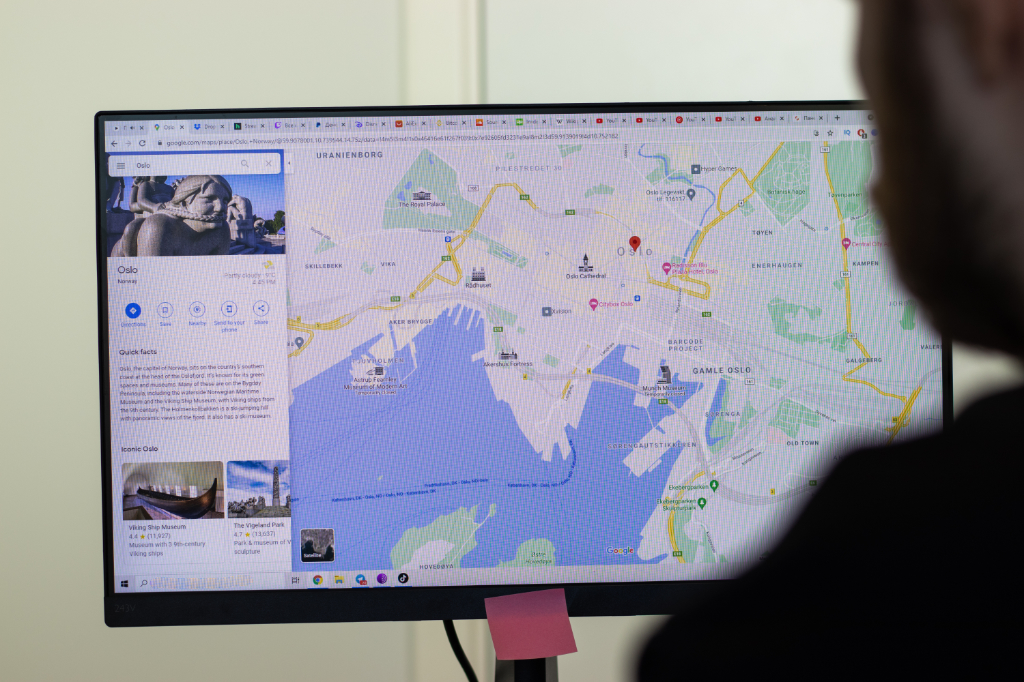
“Near me” and “open now” searches have exploded, Think with Google reported triple-digit growth in recent years.
For contract manufacturers and job shops, this is low-hanging fruit. Build complete Google Business Profiles, create location pages with specific capabilities, and add localized schema markup. It’s often the fastest path to high-intent leads.
Need more detail? See our technical SEO guide for industrial websites
Website UX and Performance: The Digital Foundation Industrial Buyers Demand
Engineers and buyers expect speed, clarity, and credibility. Period.
Google found that 53% of mobile users abandon sites that take longer than 3 seconds to load. I’ve audited dozens of manufacturer websites, and the average load time is still over 6 seconds. That’s money walking out the door.
Design for scannability and decision support. Nielsen Norman Group’s B2B research is crystal clear: complex decisions demand clear information architecture, trustworthy visuals, and accessible specs. Combine that with Google’s Core Web Vitals for measurable performance wins.
Five UX elements every manufacturing website needs in 2026:
- Fast, responsive pages (LCP under 2.5s, CLS under 0.1)
- Capability- and industry-specific landing pages
- Easy access to spec sheets, CAD models, and certifications
- Quote forms that map to how buyers actually scope projects
- Proof: tolerances, QA processes, case studies, facility tours
If your current site structure, performance, or IA is holding back conversions, it may be time to revisit your digital foundation. Our website development services for manufacturers cover everything from UX planning to performance optimization.
Get UX right, and both your PPC and SEO conversions will climb together.
Speaking of paid, let’s go there next.
PPC and Paid Advertising: Where Manufacturing Marketing Budgets Are Moving
Paid search and paid social bridge the gap while SEO builds momentum.
Industrial/manufacturing CPCs on Google Search typically run $3–$8, with conversion rates between 3–7% depending on how specific your targeting is and how good your landing page is.
When managing manufacturing PPC spend, two things consistently drive ROI: tightly themed campaigns around high-intent queries (materials, tolerances, certifications) and frictionless quote flows. Use negative keywords aggressively. Your budget will thank you.
LinkedIn Ads Dominate B2B Manufacturing Targeting

LinkedIn reports that 4 out of 5 members drive business decisions, and Lead Gen Forms average around 13% conversion rates in-feed.
For niche industrial roles, nothing beats precise job-title and skills targeting, especially when you pair it with technical content offers like whitepapers or capability guides.
Google Ads for High-Intent Manufacturing Searches
Search captures urgent demand. Someone searching “AS9100 CNC machining aerospace” or “medical-grade injection molding ISO 13485” is ready to buy.
Across industries, Google Ads search conversion averages around 7%. In manufacturing, I typically see lower-funnel campaigns outperform display and discovery by 2–3x on cost per acquisition.
Content Marketing and Thought Leadership: The Digital Differentiator
Content is your trust engine.
The Content Marketing Institute reports that 71% of B2B marketers say content has become more important in the last year. In my experience, manufacturers who publish consistently, weekly or biweekly, see 3–4x more qualified inquiries within 9–12 months.
Video Content Dominance in Technical Explanations
Video accelerates understanding like nothing else.
Wyzowl found that 96% of people say video helps them learn about products, and 89% report video delivers good ROI. Facility walk-throughs, tooling changeovers, tolerance demonstrations, these shorten evaluation cycles dramatically.
Long-Form Content and Technical Resources
Longer, in-depth content earns links and rankings. Backlinko’s research shows that long-form guides attract more backlinks, critical for competitive terms.
For manufacturing, consider 1,500–2,500-word resources that are packed with schematics, QA steps, and material science insights. This is where you separate yourself from competitors.
Need help planning? Download our content calendar template and topic map for industrial brands (link to our Digital Marketing for Manufacturers pillar).
Social Media Marketing: Beyond the Factory Floor Myth
Let’s be honest, social media works in manufacturing. You just have to lead with expertise instead of fluff.
Pew shows YouTube reaches 83% of U.S. adults, while LinkedIn remains the B2B hub for professionals. I’ve seen a single LinkedIn article series generate over 50 qualified leads when it tackled gnarly technical tradeoffs head-on.
LinkedIn: The Primary Social Channel for Manufacturing
LinkedIn is where engineers, ops leaders, and procurement scroll during their downtime. It’s also where employee advocacy humanizes your brand and attracts talent. Share application notes, test data, and customer success stories.
YouTube as the Second Largest Search Engine for Industrial Research
Engineers treat YouTube like a learning library. Tutorials, set-up guides, and “how it’s made” shorts earn subscribers and drive site visits.
Pro tip: Pair every video with a companion article and spec sheet for maximum impact.
Want to formalize your approach? See our social media strategy for B2B manufacturers (link to our social media strategy for B2B manufacturers).
Marketing Automation and CRM Integration: The Digital Infrastructure
Long sales cycles demand nurturing. There’s no way around it.
Companies using marketing automation see a 451% increase in qualified leads according to Annuitas. Nucleus Research found marketing automation can increase sales productivity by 14.5% while cutting marketing overhead by 12.2%.
Lead Scoring and Nurturing in Long Sales Cycles
In manufacturing’s typical 6–12 month cycles, behavior-based scoring surfaces real opportunities. Track spec downloads, tolerance calculator usage, repeat visits, these signal buying intent.
After implementing automation, one client reduced their sales cycle by roughly 30% through sequenced education and BOM-ready checklists. Salesforce and HubSpot both offer strong manufacturing integrations.
Analytics and Attribution: Measuring What Matters in Manufacturing Marketing
Forget vanity metrics. The best-performing teams I work with track:
- Pipeline and revenue are influenced by organic, paid, and referral
- Cost per qualified lead (not just MQL)
- MQL-to-SQL and SQL-to-Opportunity conversion rates
- Content-assisted opportunities (multi-touch)
- Time to quote and win rate by channel
Adopt GA4 with event-based tracking and BigQuery exports for deeper analysis. Use Think with Google’s guidance on measurement frameworks.
And here’s the thing: clean CRM data isn’t optional anymore. It’s the foundation of credible attribution.
Preparing Your Manufacturing Marketing for 2026
The manufacturing digital trends for 2026 are clear: technical SEO, fast UX, targeted PPC, expert content, social proof, and automated nurturing tied directly to revenue.
Start with these four moves:
- Fix Core Web Vitals and conversion paths
- Build long-tail, spec-driven content clusters
- Launch tightly targeted search and LinkedIn campaigns
- Connect automation and CRM for clean attribution
As 2026 unfolds, manufacturers who make steady, informed improvements, not giant leaps, will outperform competitors still relying on outdated tactics. If you want a partner who understands the nuances of industrial marketing and can help you map out these next steps, you can always reach out to our team to talk through your goals and challenges.